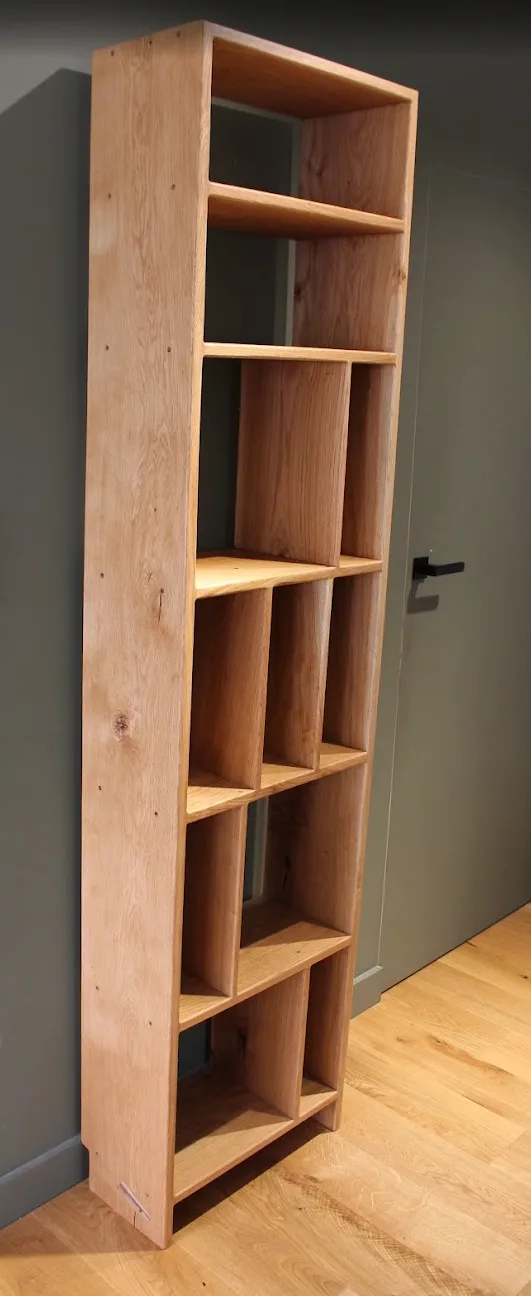
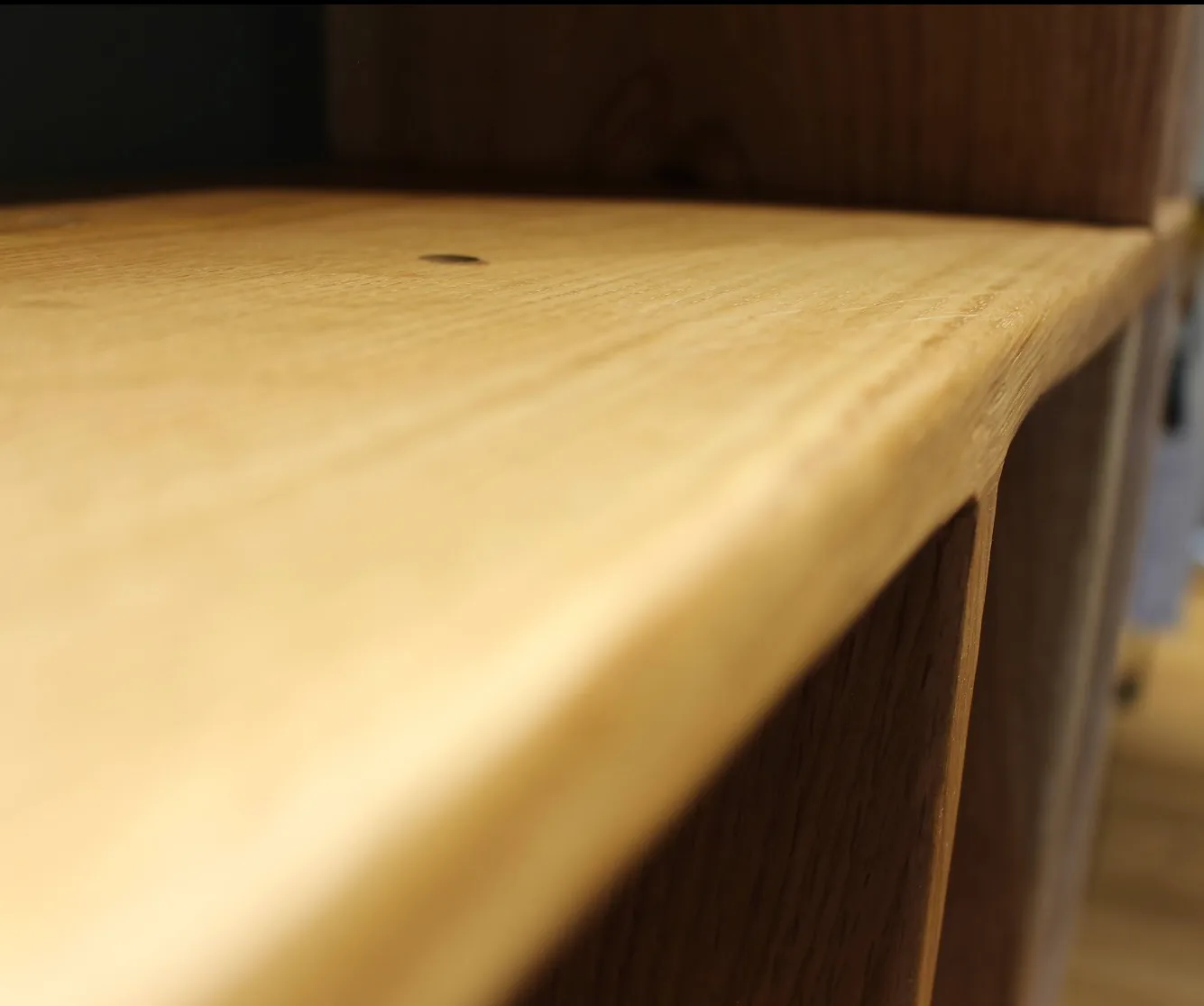
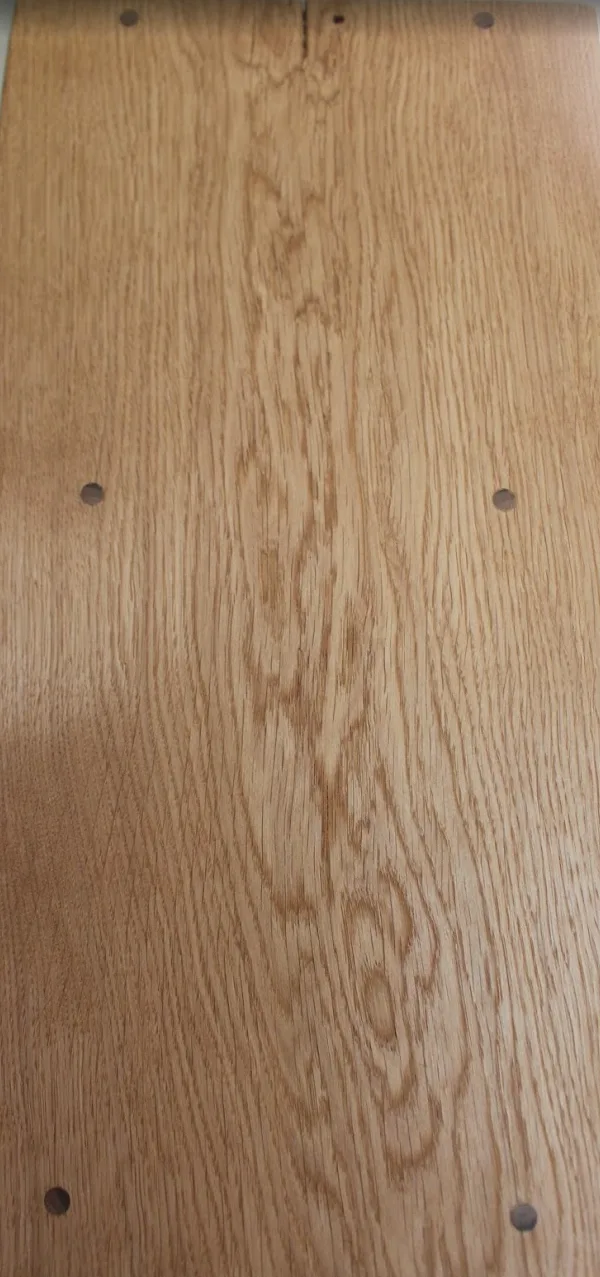
An oak column, 206 cm tall, 52 wide. The first piece where I hid absolutely nothing — no filler, no hunting for boards without flaws.

The commission was two shelving units. A pair. Him and her. Amytis came first — the hanging gardens, seven terraces, a woman who missed her mountains. The second was meant to be a brother, a lover, the other half. It stopped being a character and became an emotion. Firāq. An Arabic word, used in Persian: separation. The ache that comes from parting with someone you love — the same ache that built the gardens.
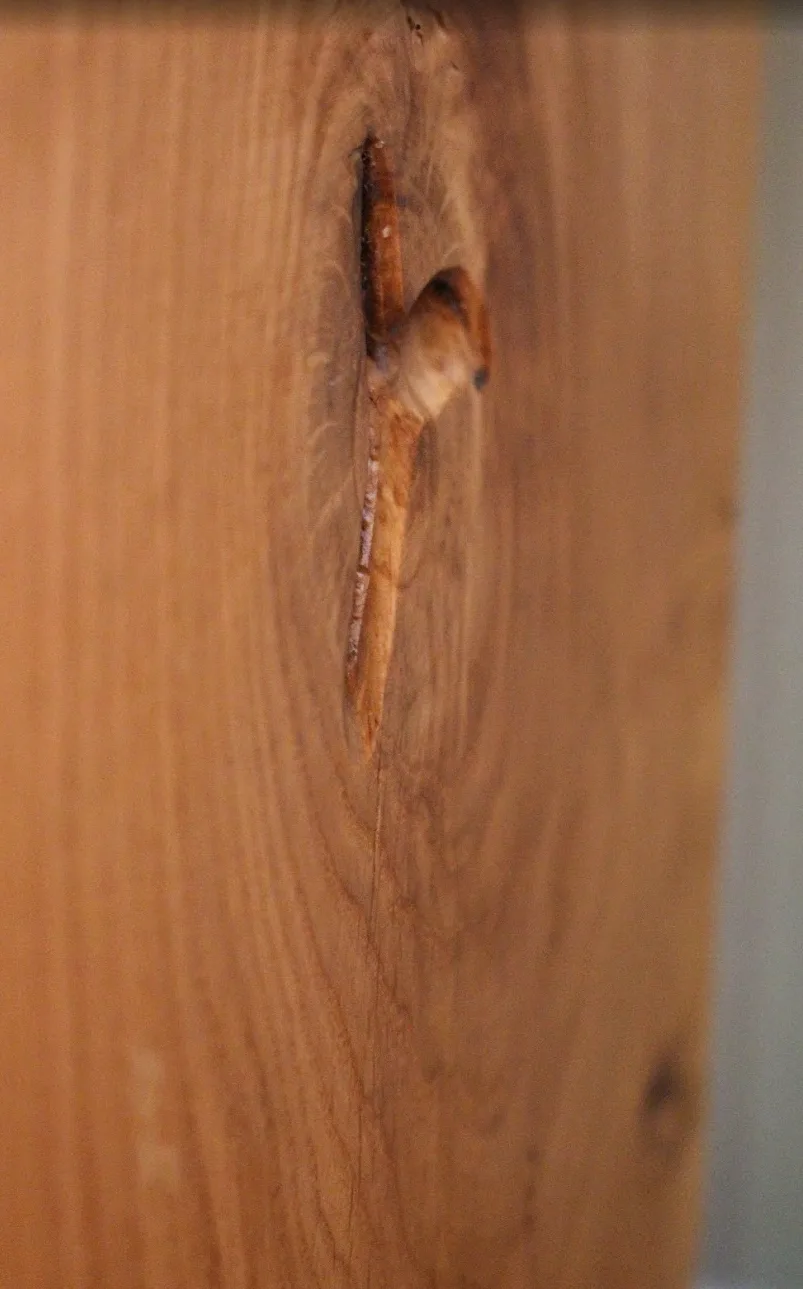
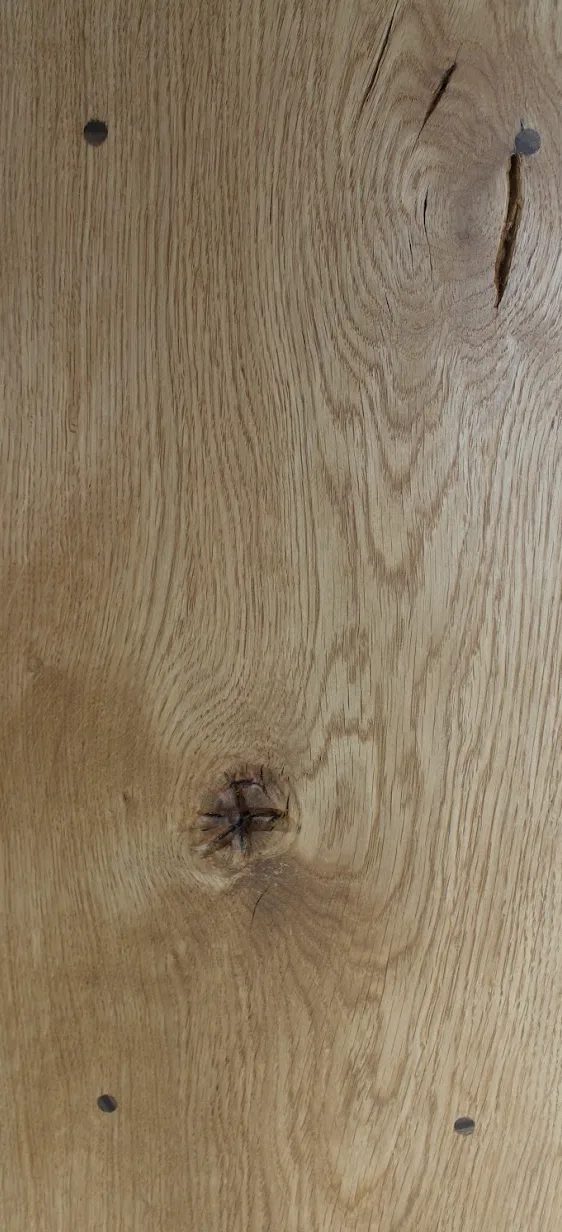
I didn't pick the wood. I hid nothing — no filler, no hunting for boards without flaws. The face cracks stayed on the surface. I reinforced what had to be reinforced and left the rest the way it came.
The thought of passing arrived on its own. It is ugly and beautiful at once. Wood cracks the way a person sometimes cracks — it carries scars on the body and on the soul. The client uses it as a liquor cabinet. Separation you can take the edge off.


Shelving units don't forgive. Half a degree off at the floor becomes almost 2 cm at 2 metres. There is no point at which you make that up — either it is plumb from the first cut or it never is.
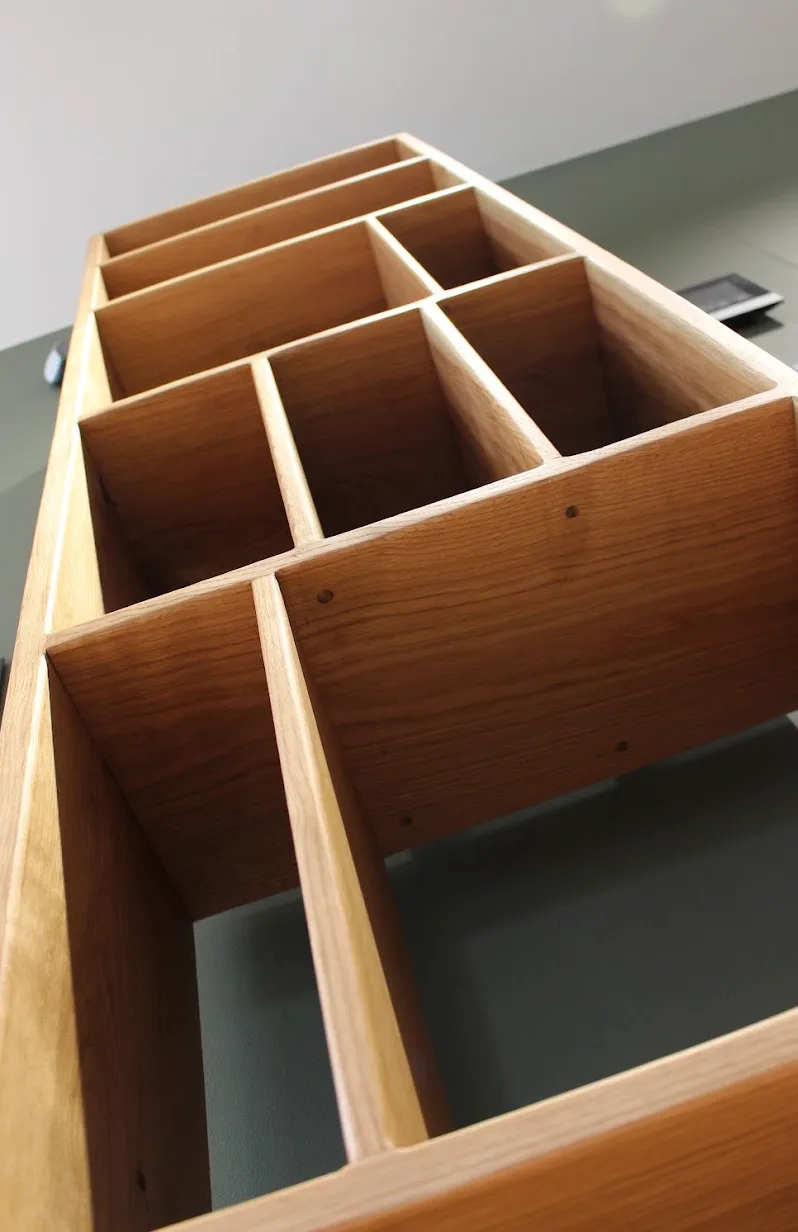
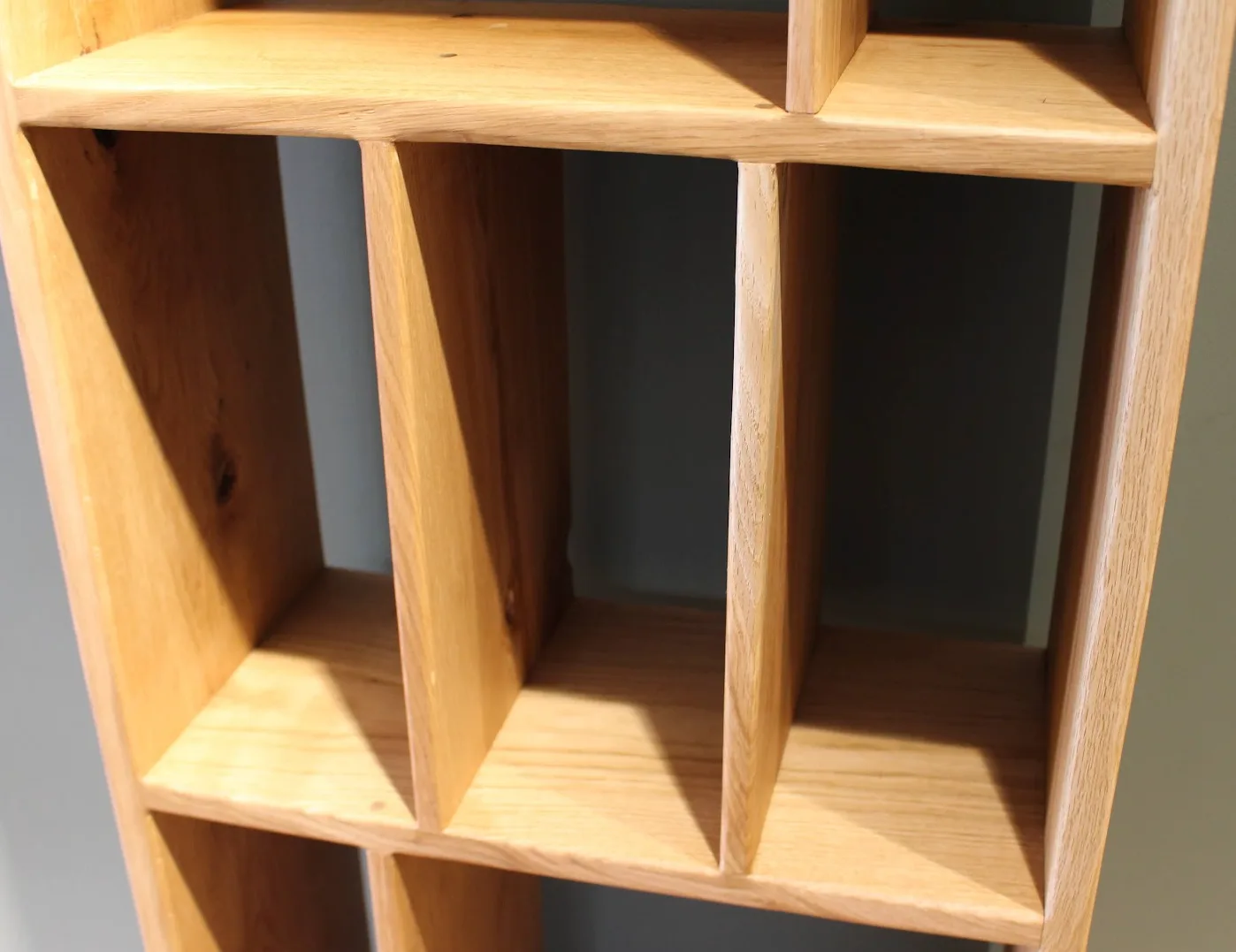
There are no legs. 2 long boards, 206 × 28 cm, 22 mm, each from a single piece — those are the legs. Between them 7 horizontal boards: 6 shelves and one capping the top, plus 5 vertical uprights. 7 levels — the same count as the terraces in Amytis; you will put something on that last one too. The rhythm of the uprights came from the client, I reshuffled the order, the idea survived. All of it checked with a try square and it still is not perfectly true: it came out crooked, 1.5 cm at the top. At the client's house that lean turned out to let it sit flush against the wall without cutting into the skirting board. I did not plan it, and I am not going to pretend I did.
The uprights are 15 mm. I have nothing that resaws, so they came down from 30 on the thicknesser — half of that wood left the workshop as shavings. That is what it looks like when the workshop is 25 square metres and there is no bandsaw in it.
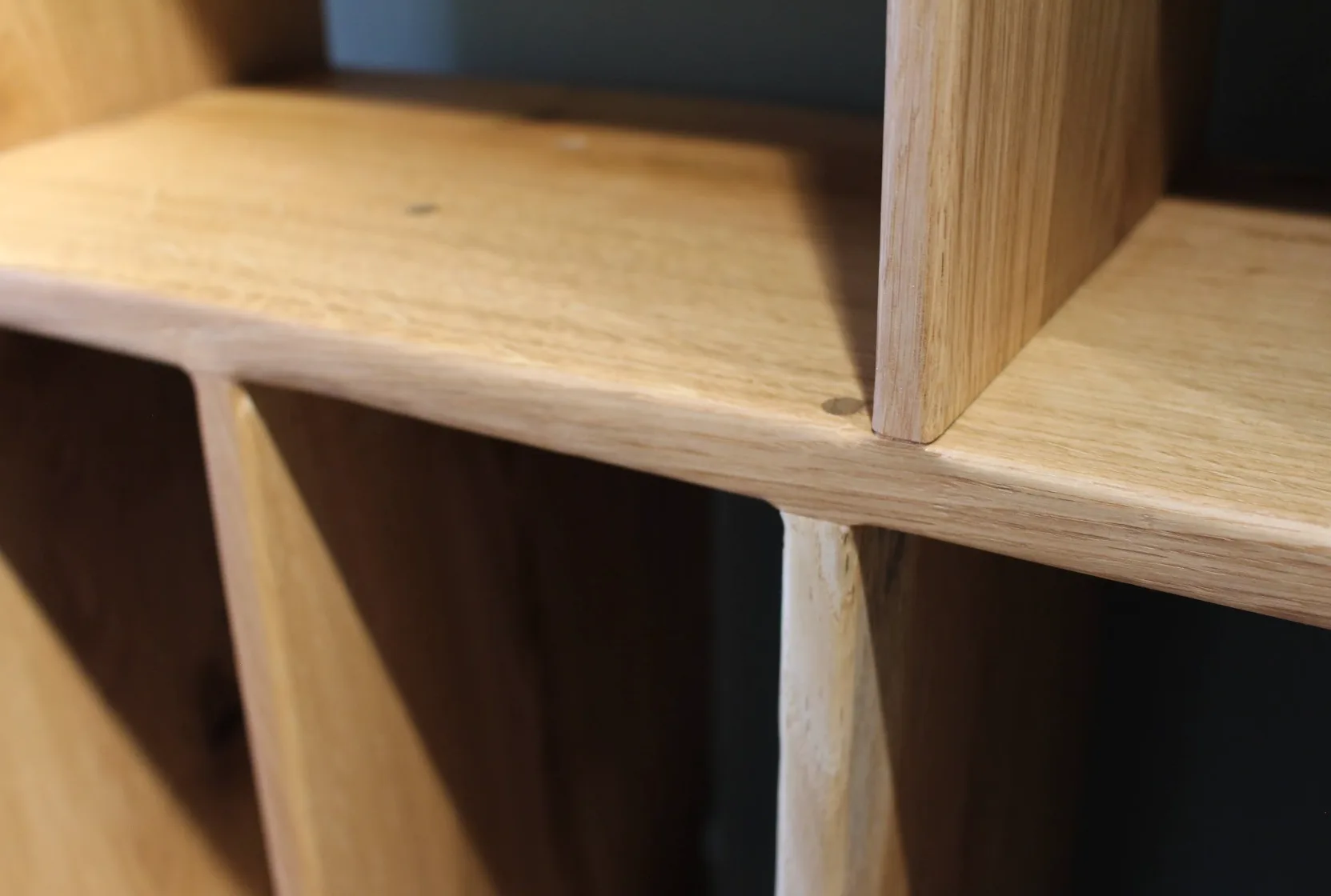
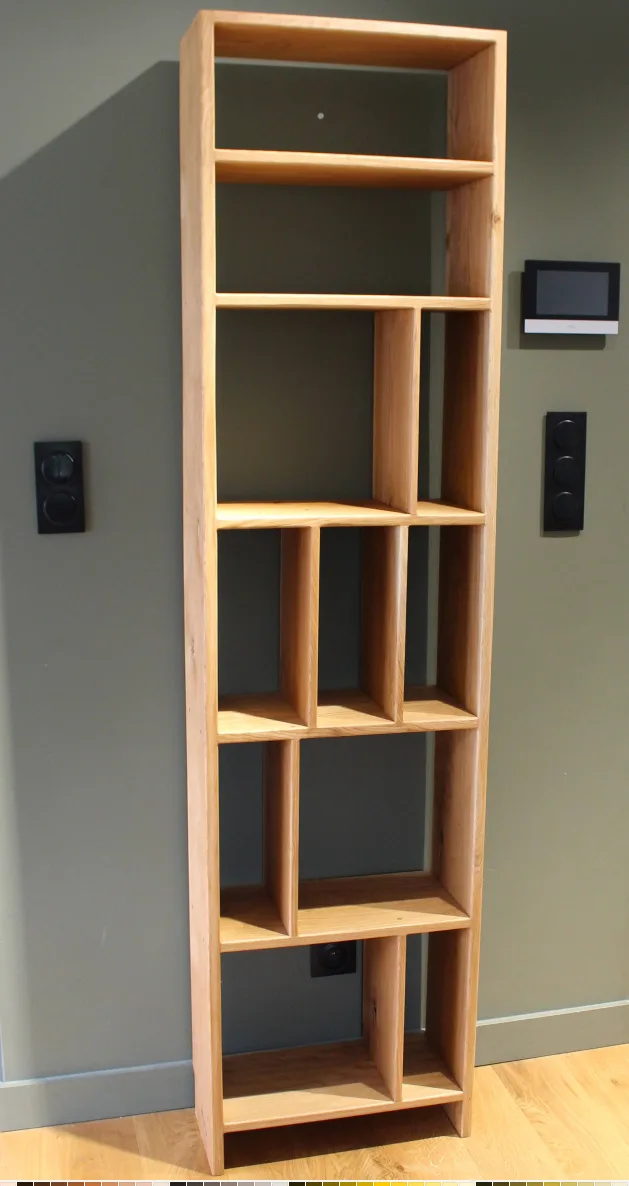
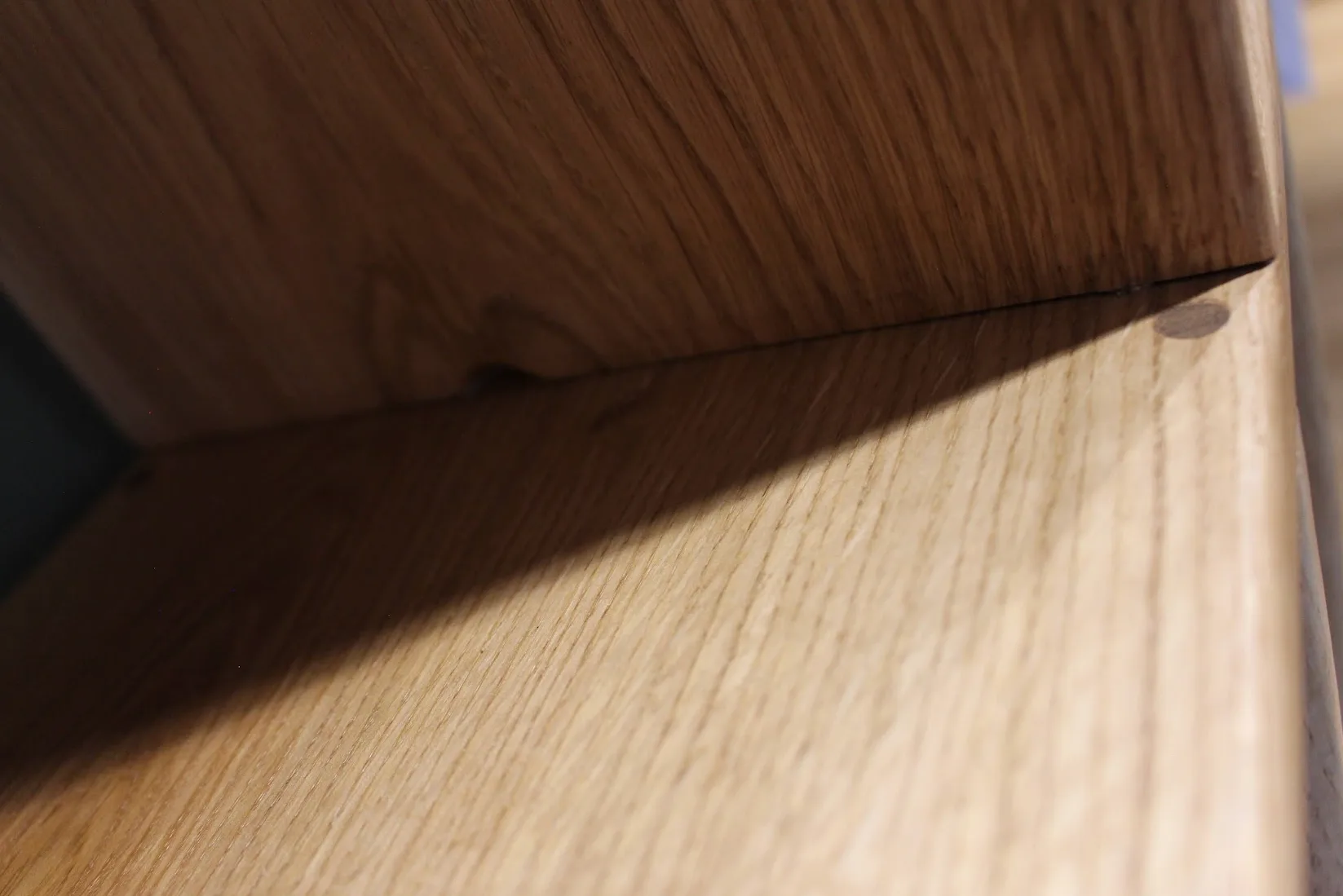
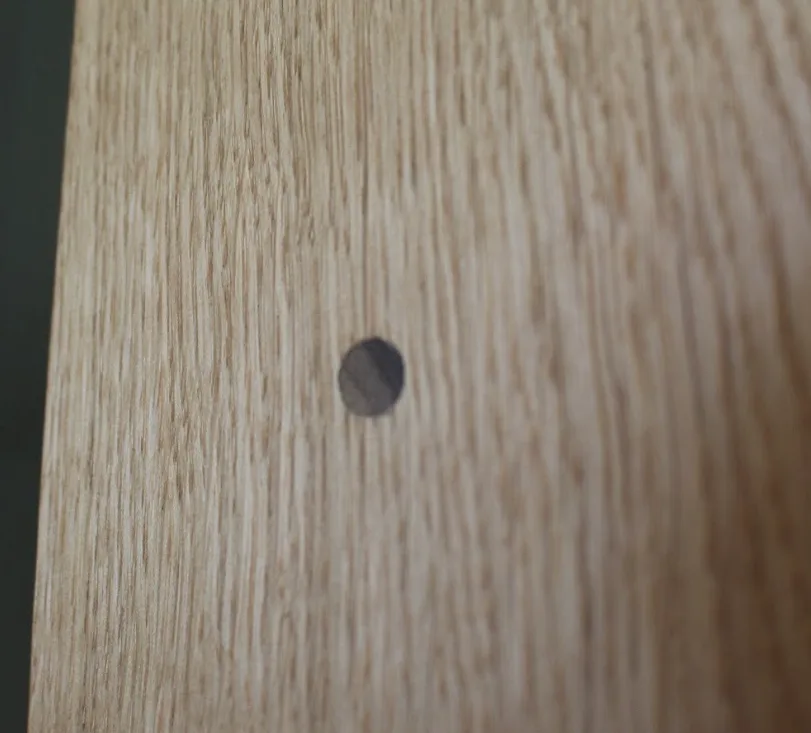
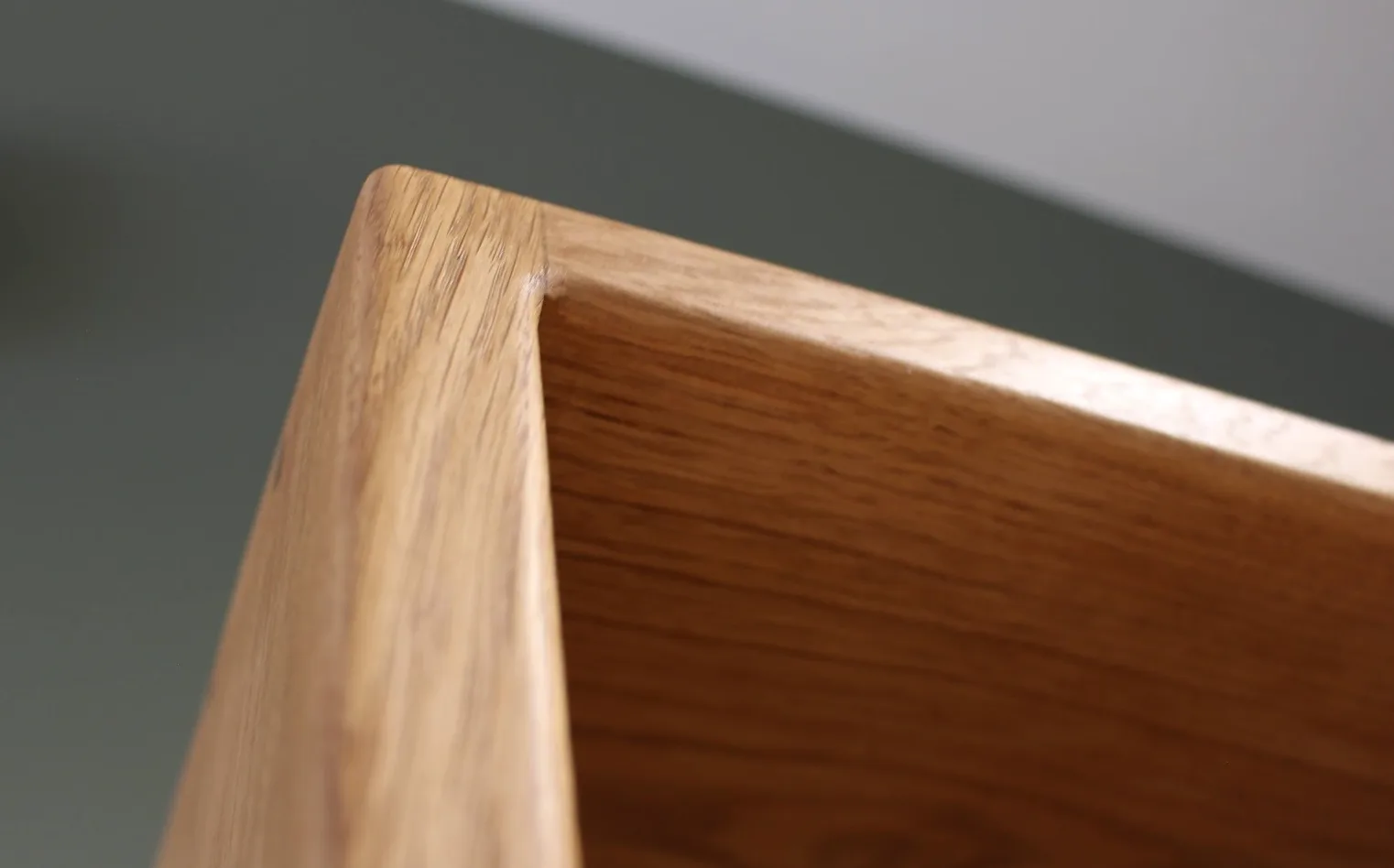
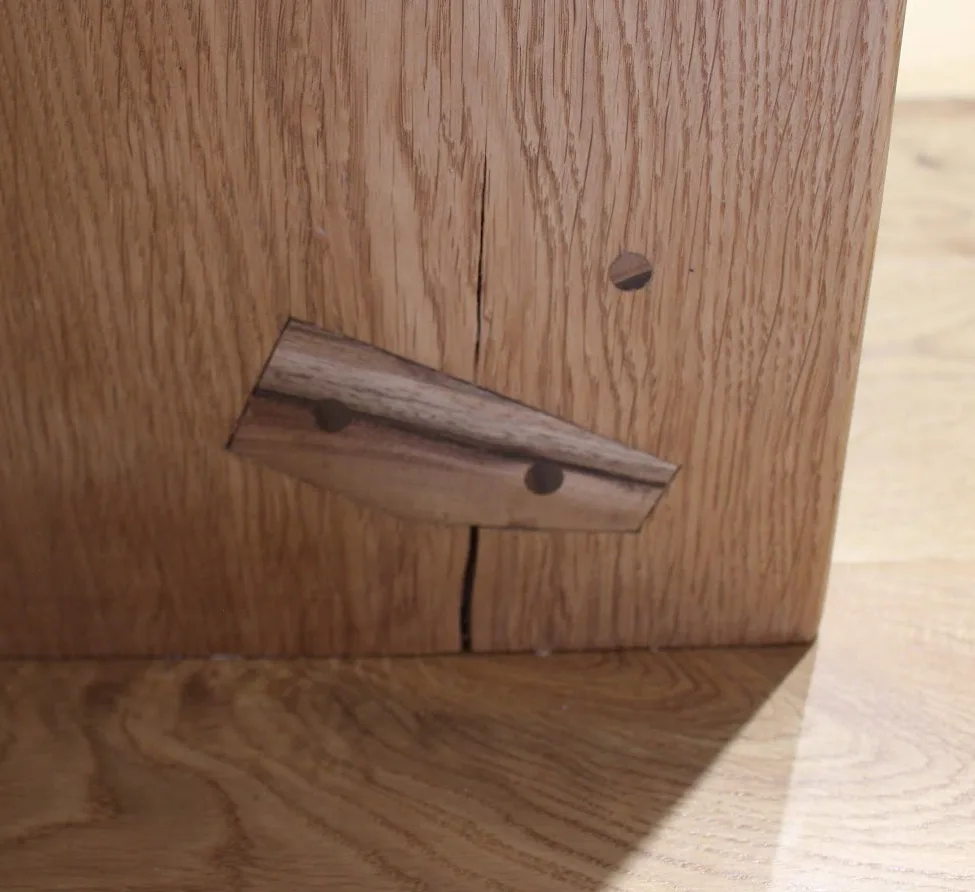
Every accent is walnut. Polish, ordinary. The 8 mm dowels along the long sides are visible because they are meant to be visible — I don't mask the joinery, I show it. Butterflies went where the cracks ran deep enough to keep running. Corners routed, all of them.
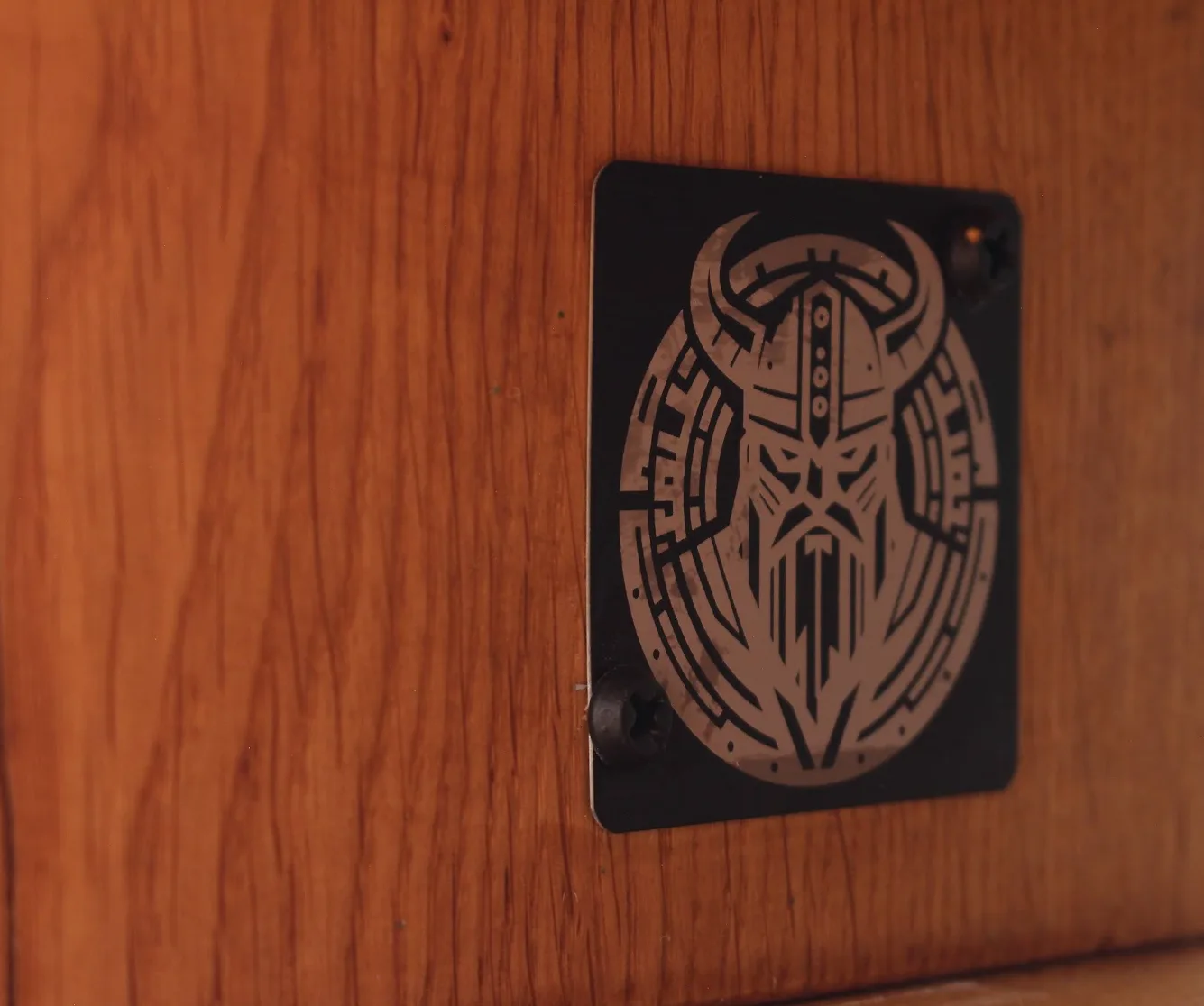
On the underside of the lowest shelf I stamped memento mori. Old, plain, Latin. It is not in the description and not in any photograph. The client doesn't know. He may find it in ten years, repainting the walls. He may never. The steel plate on the inside of the left leg you can see — it is the last photograph in this chronicle.

Wood cracks the way a person sometimes cracks.
It carries scars on the body and on the soul.
The numbers this piece left behind in the notebook.