Berserker Oak / Fylgja / Chronicle
FYL-CAB-0001 · 2026
Andvari
Treasure keeper
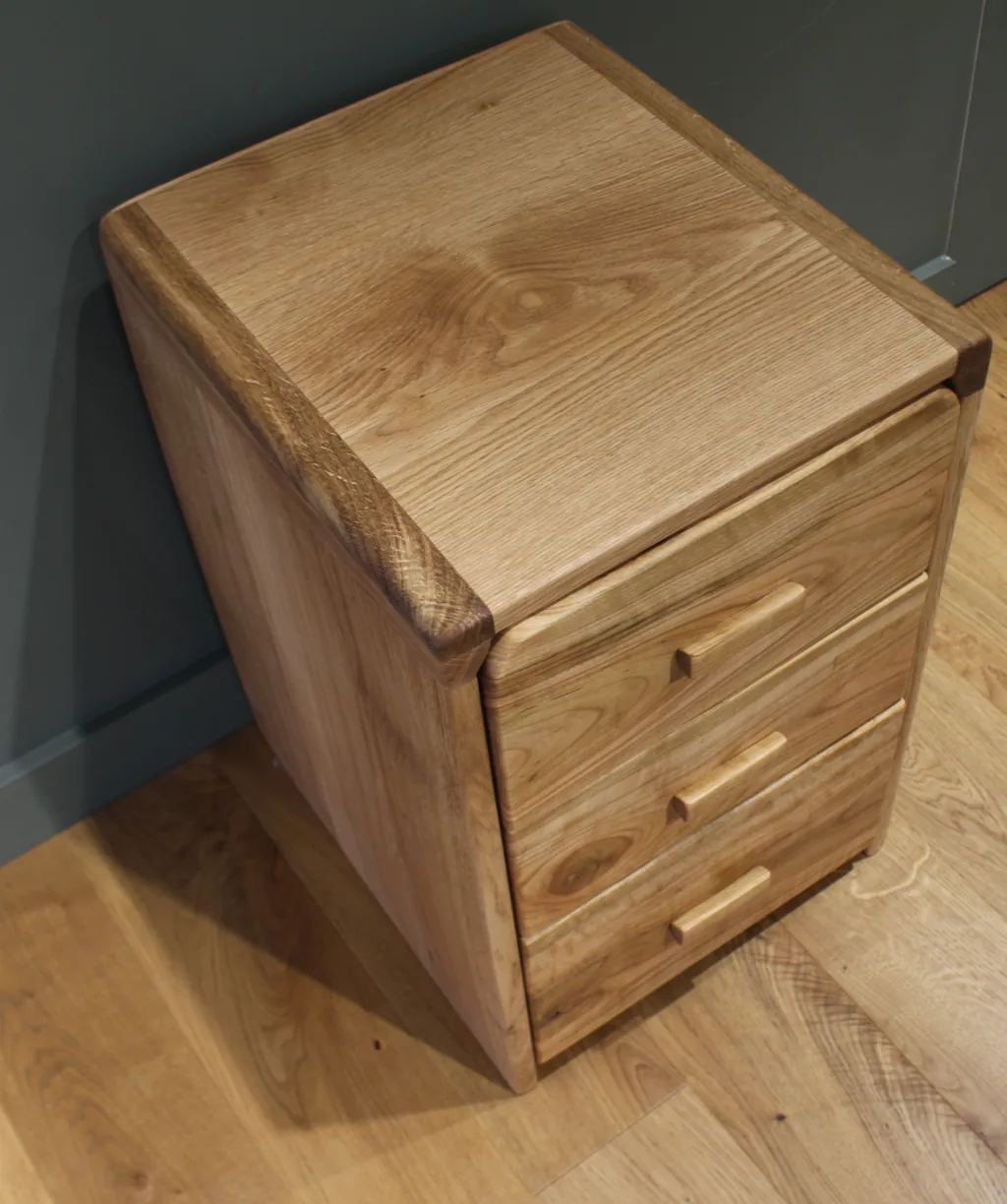
An under-desk cabinet: 60×40×45 cm, three drawers, thirty kilograms. Its best wall faces the wall.
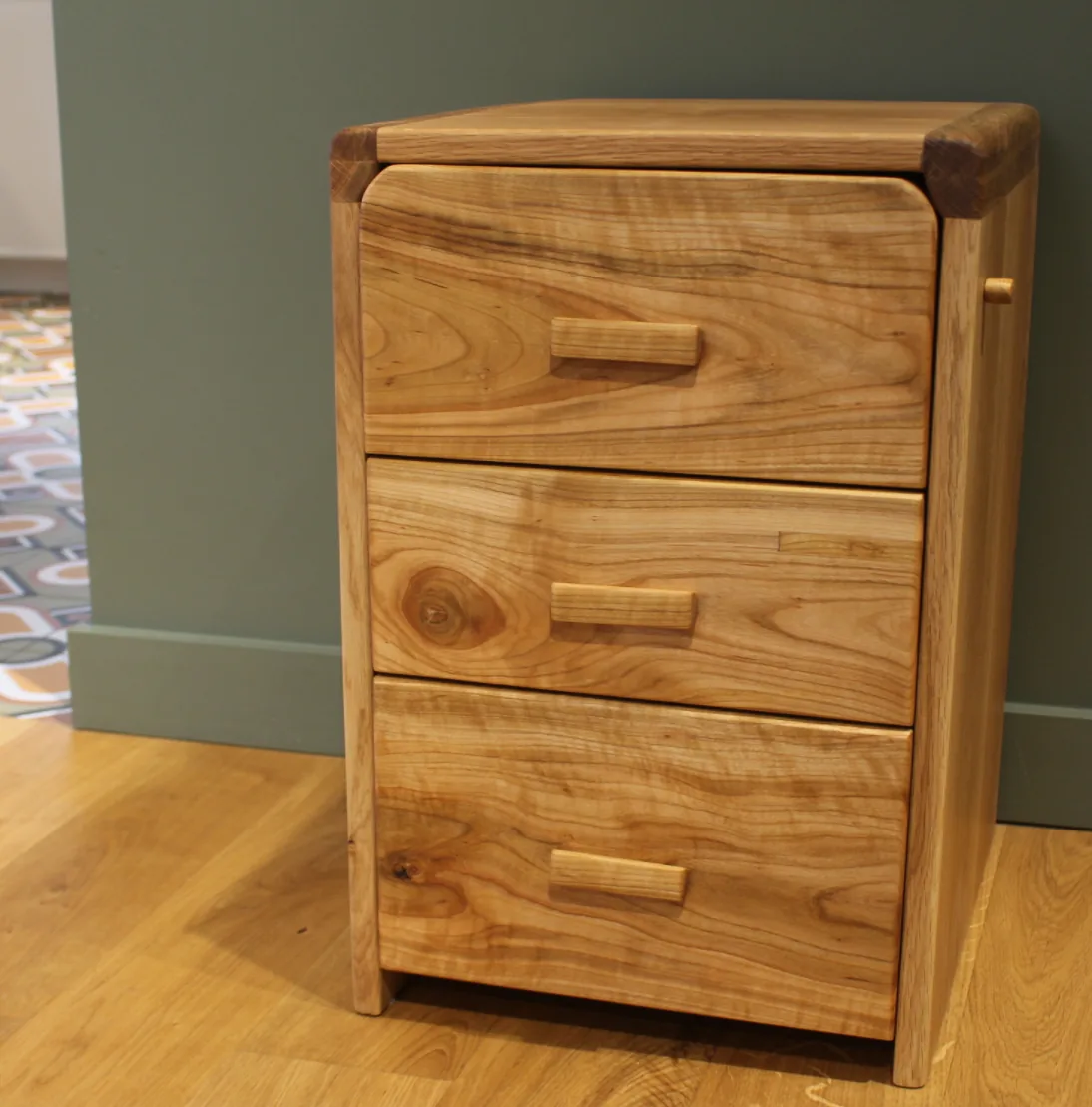
◆ Andvari · oak & cherry · 60×40×45cm · September 2026
An under-desk cabinet: 60×40×45 cm, three drawers, thirty kilograms. Its best wall faces the wall.
A friend ordered it. The same one who once bought my stools — the first thing I ever sold. He came back: I need drawers under the desk. And a lock, because there's a two-year-old in the house. Andvari is the dwarf who guarded treasure beneath a waterfall. This cabinet guards the things a metre-tall giant shouldn't reach just yet.
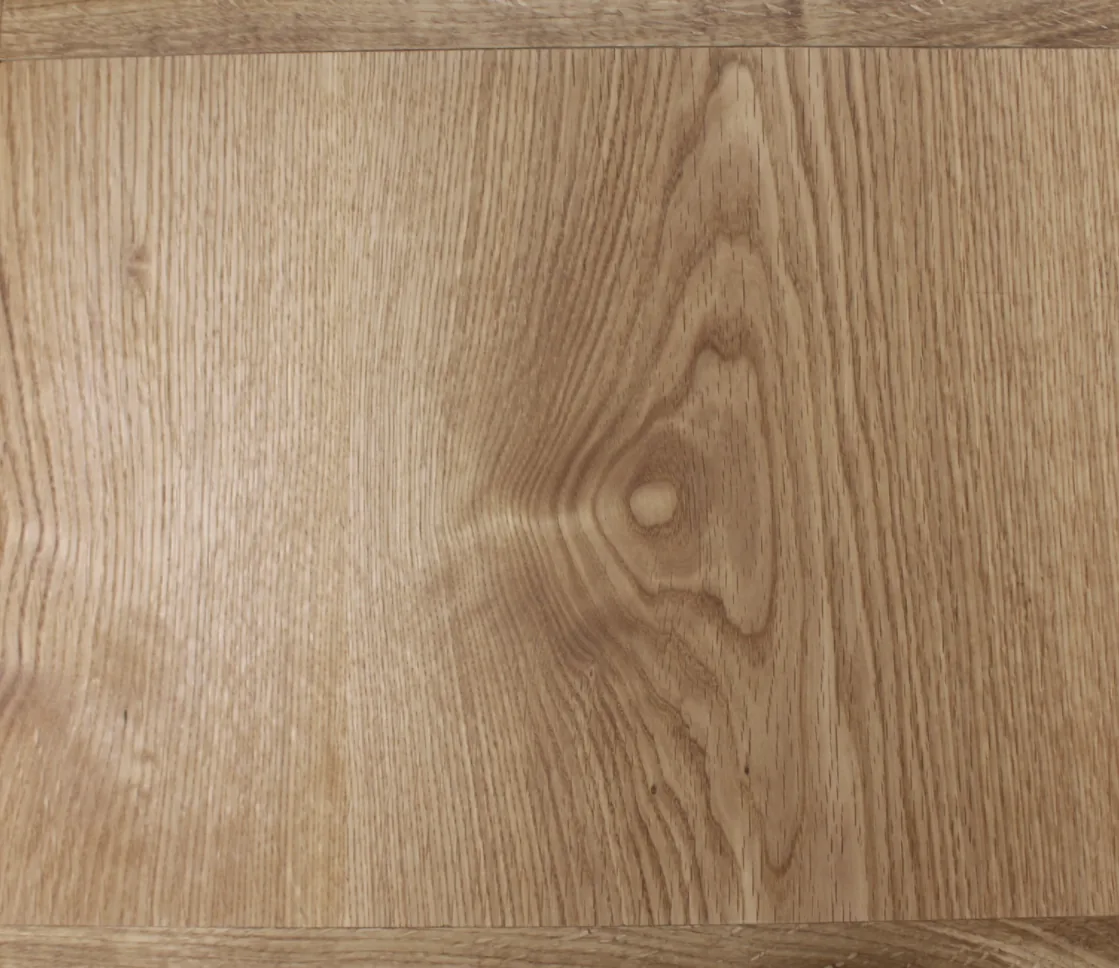
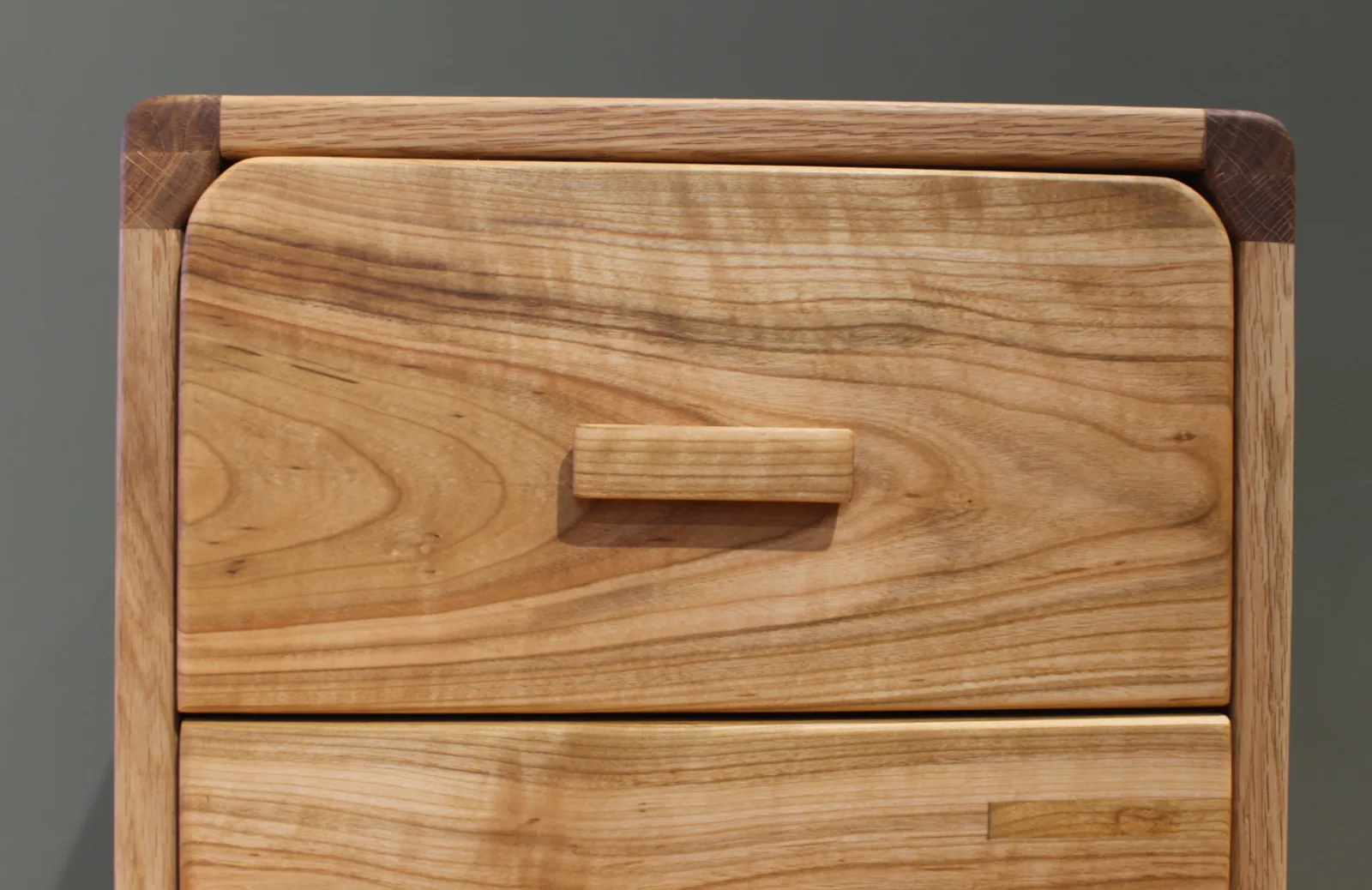
Cherry fronts. A first for the palette — until now it was oak, ash, walnut. Cherry will darken through its first year, tuning itself to the oak carcass before the owner's eyes. The knot on the middle front stayed. So did the black mineral streaks. The defect is the detail.
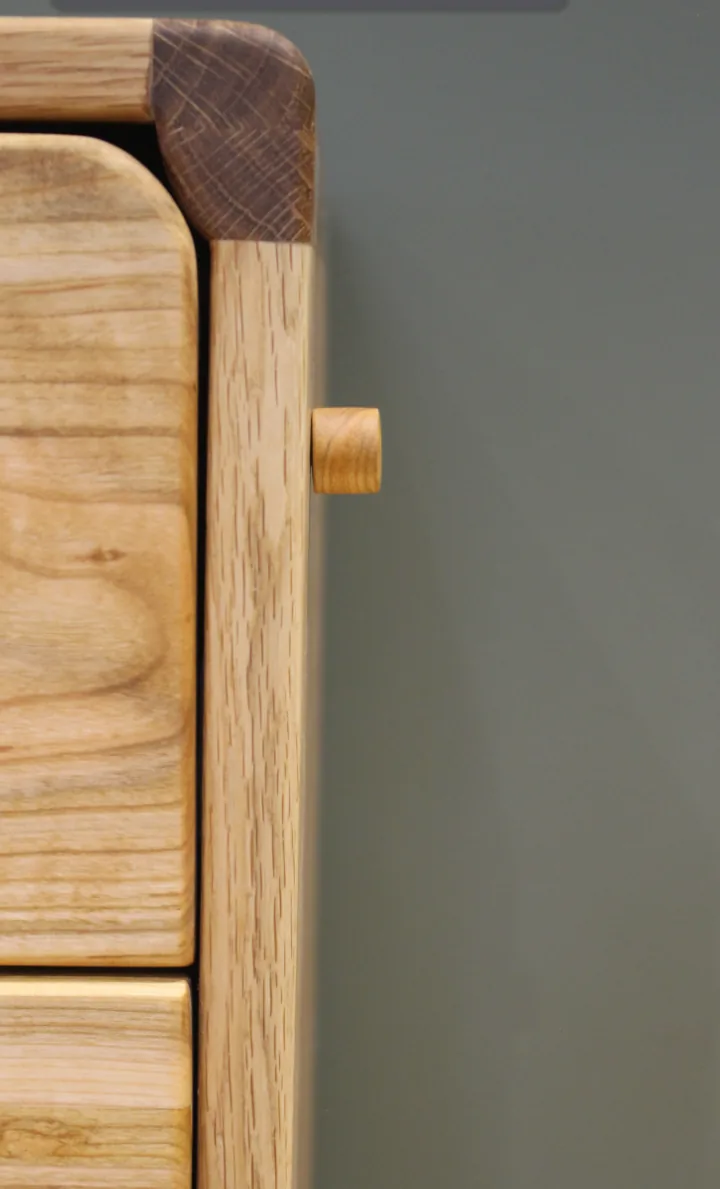
The lock was supposed to be store-bought, mechanical. At some point that stopped fitting the rest. A wooden peg remained. Two years of life experience is not enough to crack it — and when it stops being enough, it will mean the kid has outgrown his lock. The cabinet can wait.
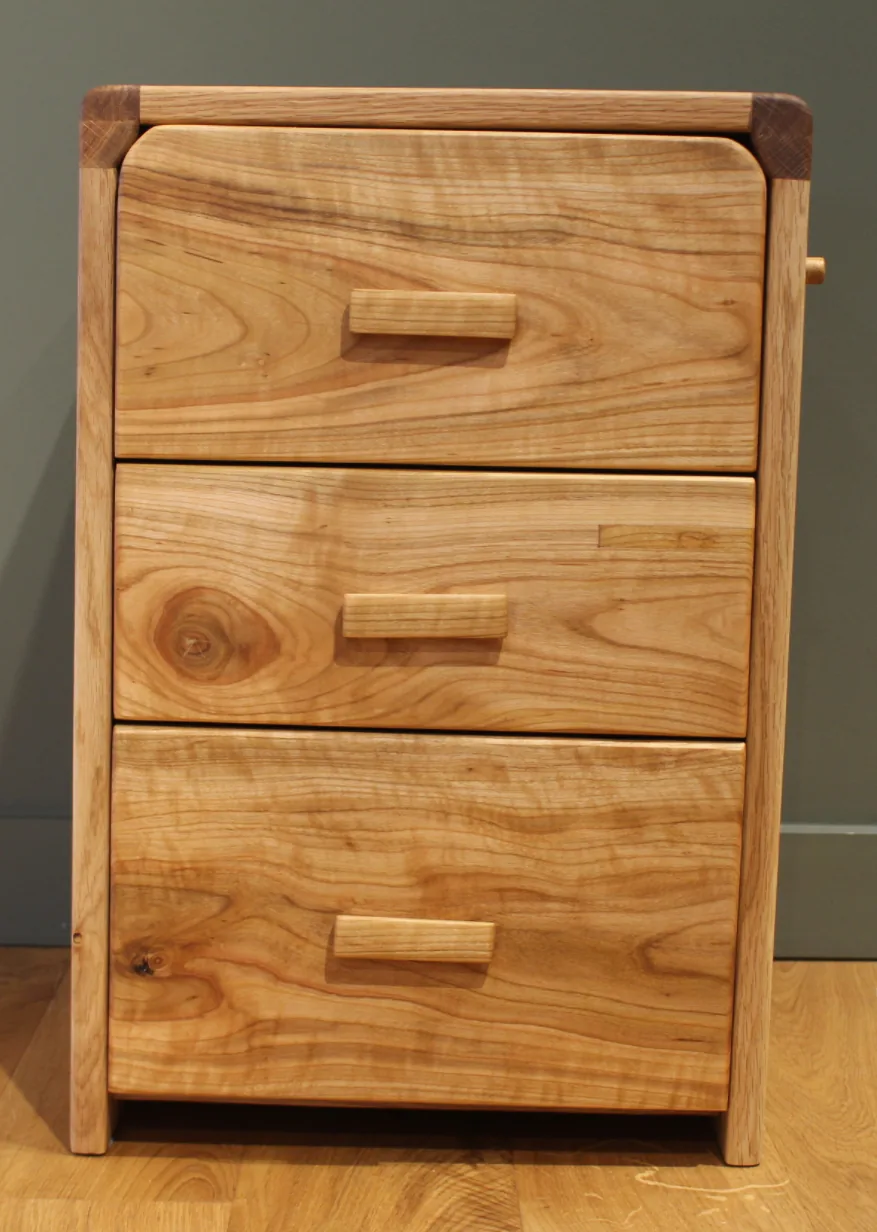
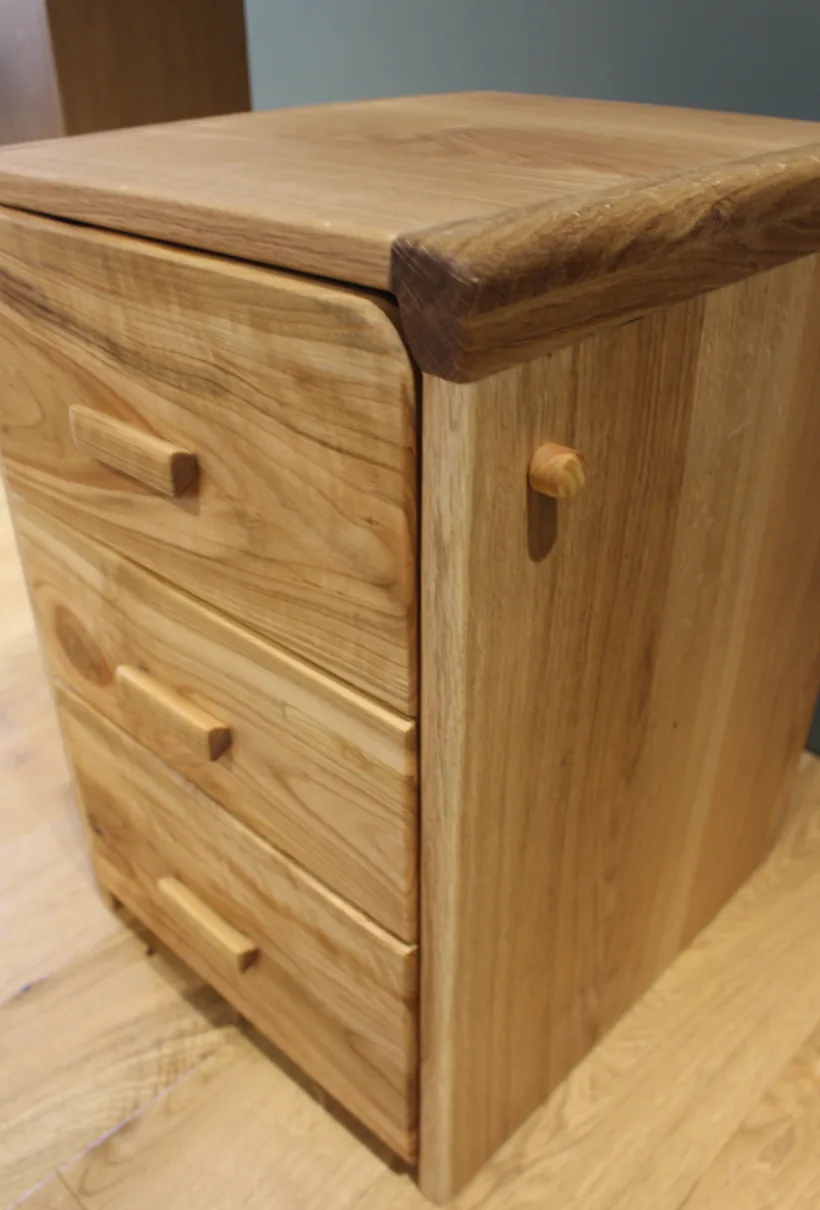
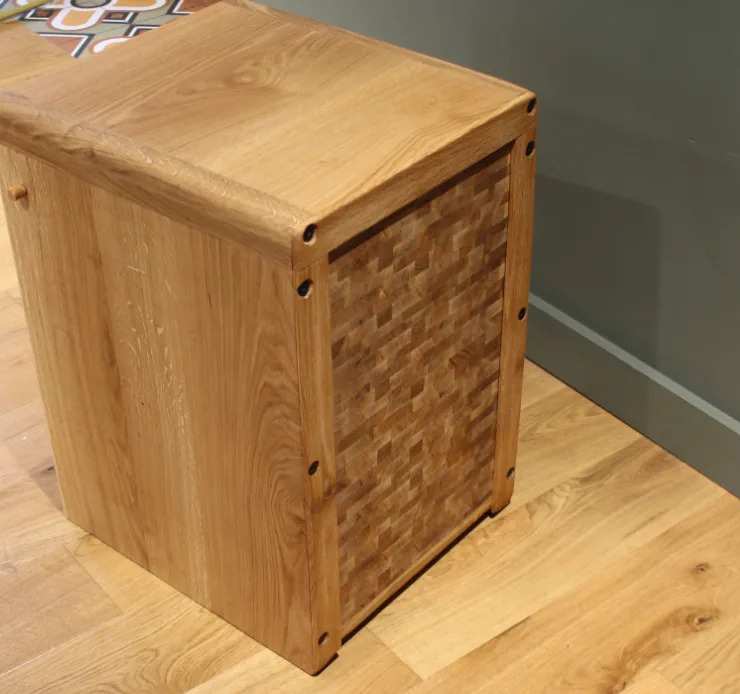
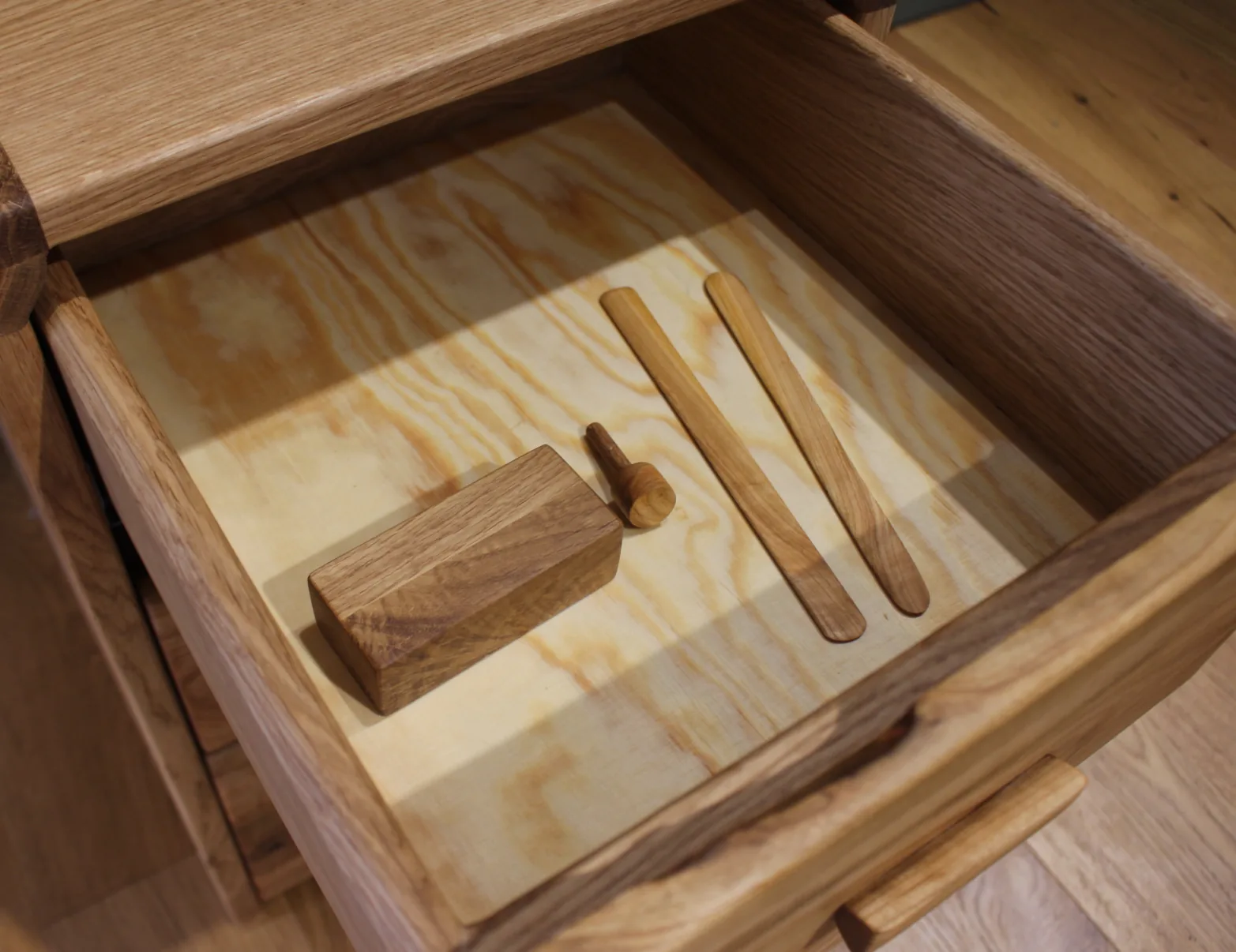
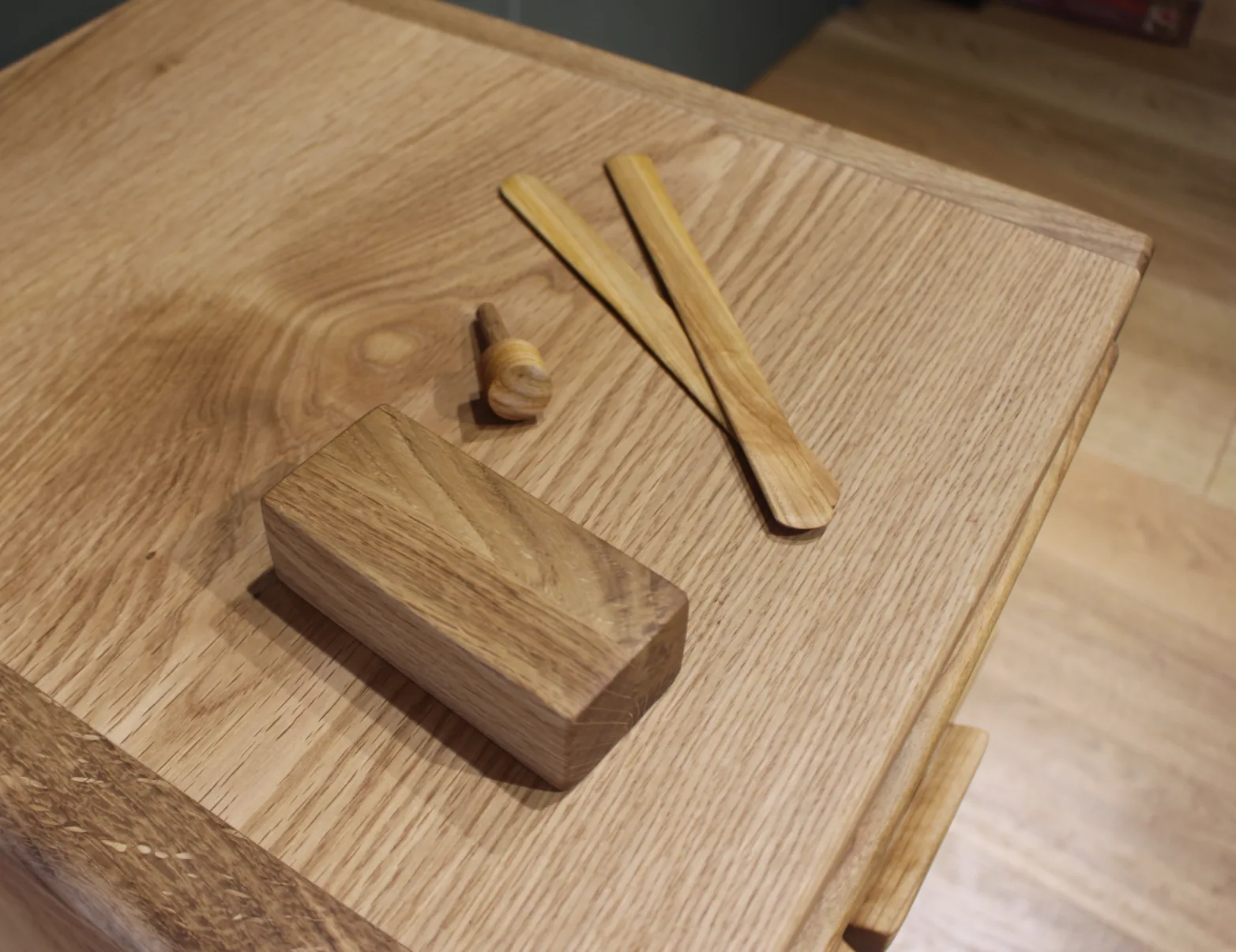
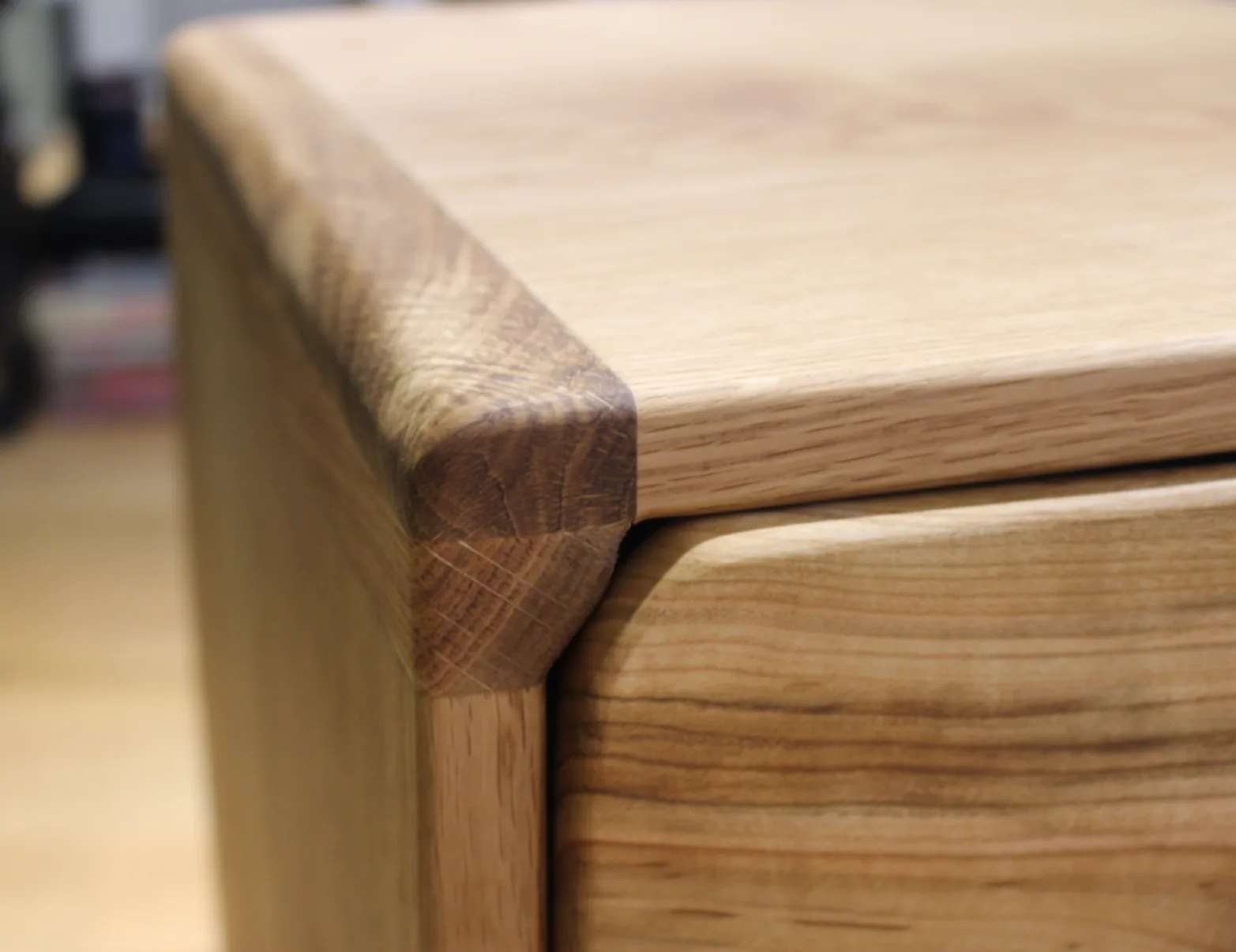
The carcass is 22 mm oak, joined with dowels shaved from the build's own offcuts — the same batch of wood the cabinet came from. The corners are not an overlay: each one is shaped from a solid ~3×6 cm batten, so the rounding at the top could be genuinely large. A two-year-old who runs into this piece has nothing to hit. The paperweight sitting in the drawer is a cut-off from that same batten. Apart from the runners and the plywood bottoms, nothing here came from a shop.
The first drawers in this workshop's history. Oak sides, 19 mm, plywood bottoms in grooves, undermount runners hidden beneath the bottom — so the drawer side stays clean, no steel rail at half height. The runner geometry forced the fronts to stand 8–10 mm proud of the carcass. Instead of hiding it, they got rounded edges. The consequence looks like a decision, because it became one.
The lock is a hole and a peg. The peg slides in above the top drawer and blocks it in the carcass; to open, you pull it out. I made two, in different diameters — smaller and larger, to choose from, plus a spare. Such things get lost. In a house with a two-year-old, they get lost faster.
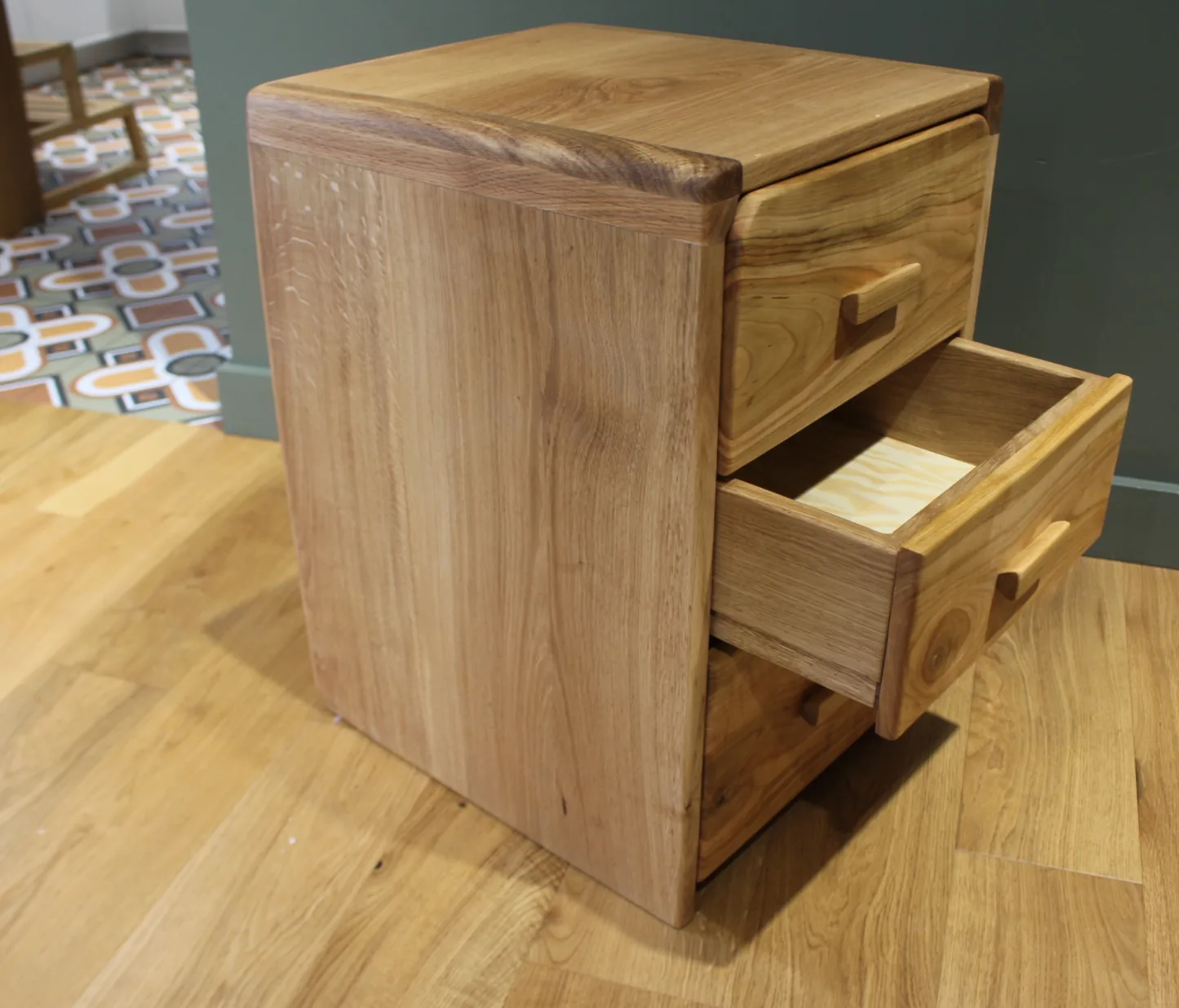
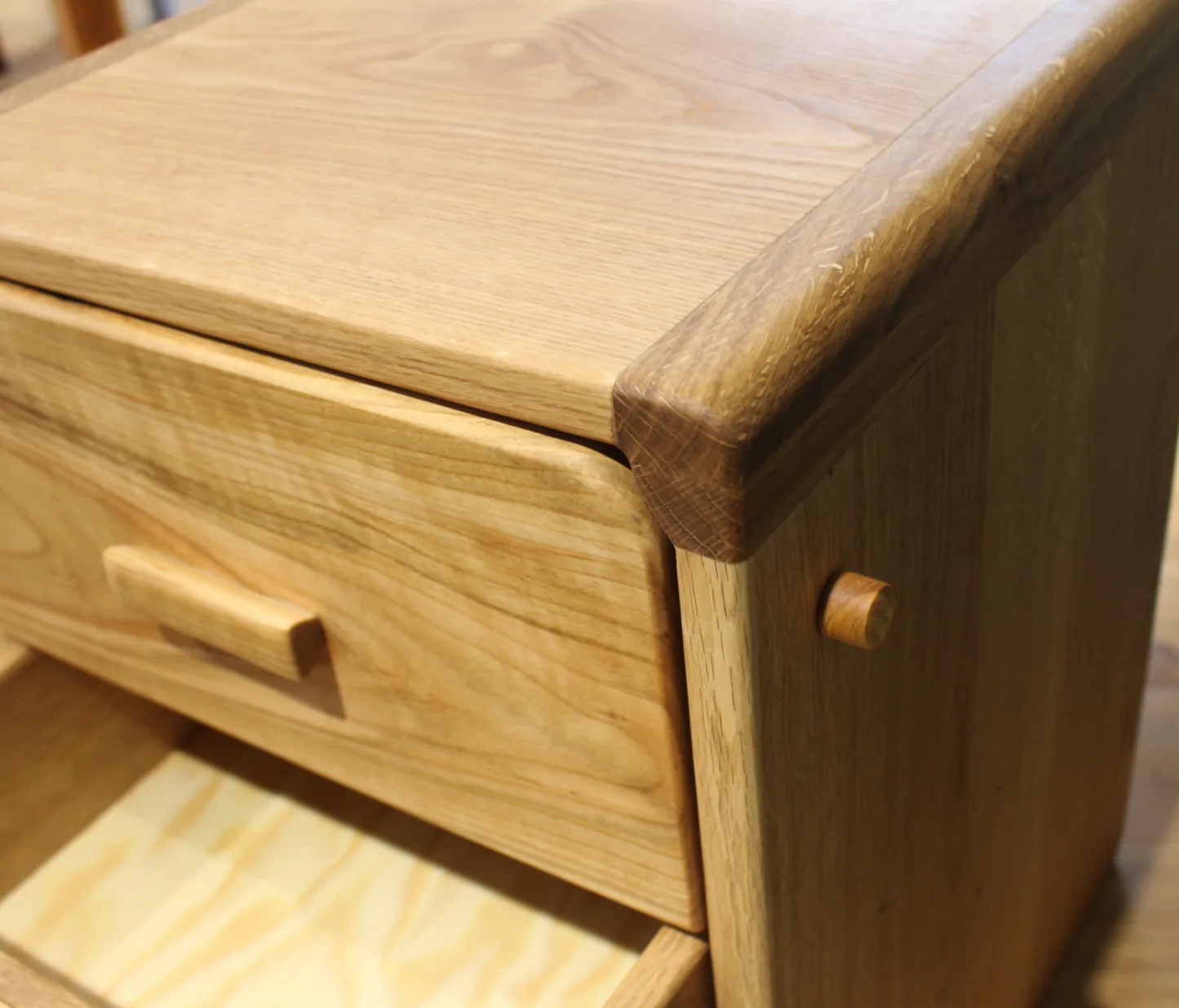
The pulls are shaved from the same cherry as the fronts. One radius rounds both fronts and carcass — a piece within a two-year-old's reach shouldn't have sharp edges, and a piece with proudly protruding fronts shouldn't pretend it doesn't. Dark oak corners sign the top.
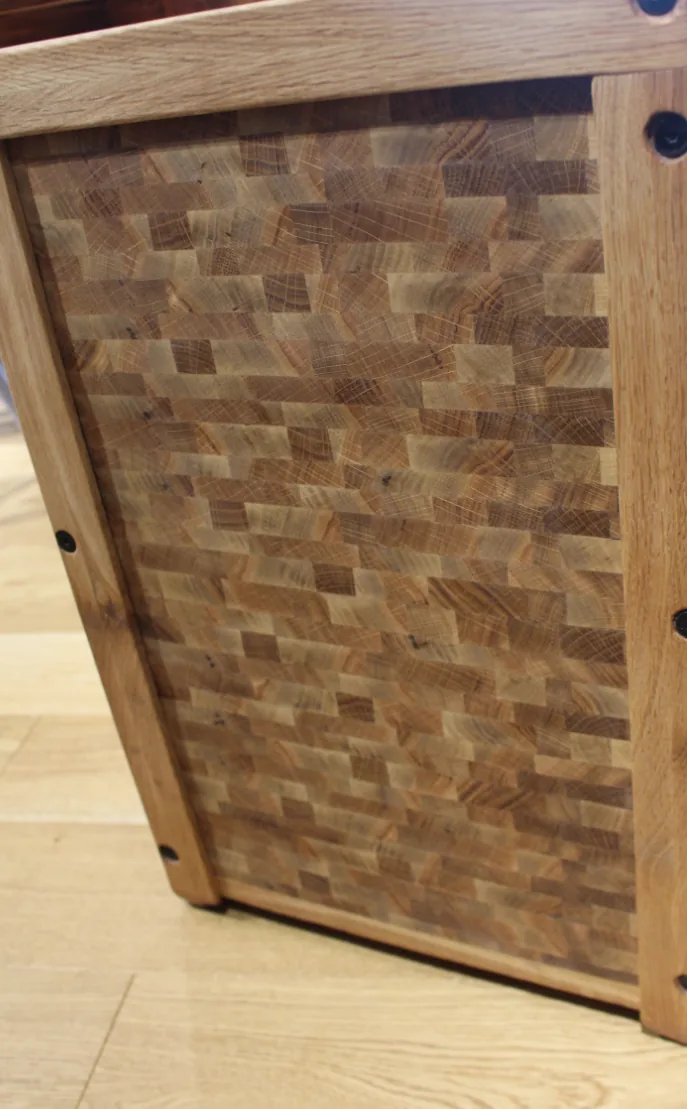
The back: around 450 blocks of end-grain oak. Strips jointed with a hand plane, glued into a panel, ripped into slices, turned and glued again. A mosaic where every block catches light at a different grain angle. The panel floats, held by strips, because end grain moves in both axes at once. It faces the wall. The most work in the whole piece went into the one part you never see.
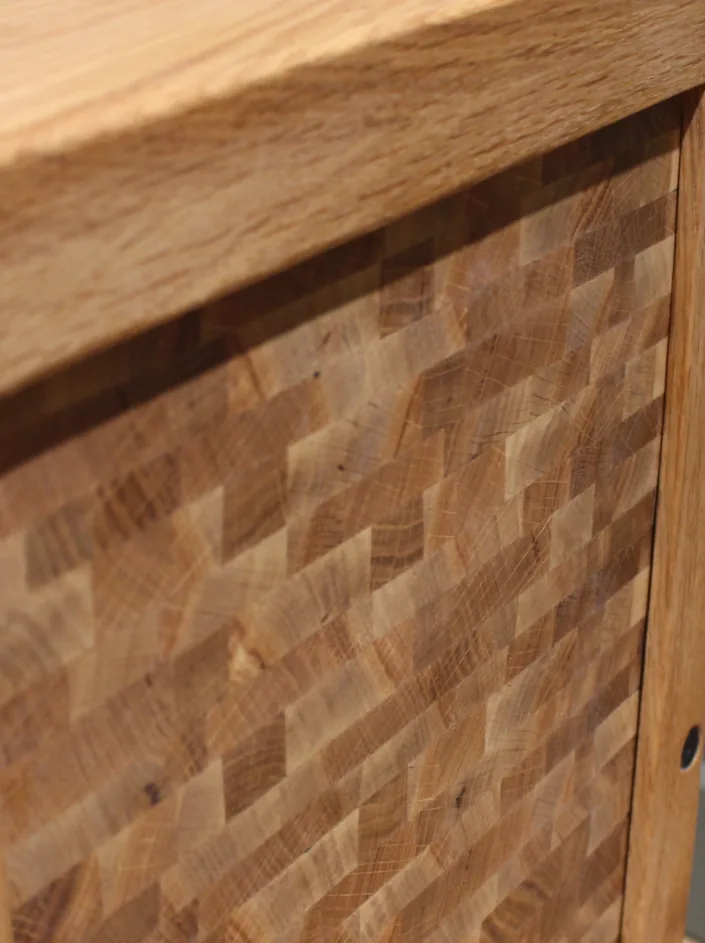
The most work went into the wall no one will ever see.
On purpose.
The numbers Andvari left in the notebook.